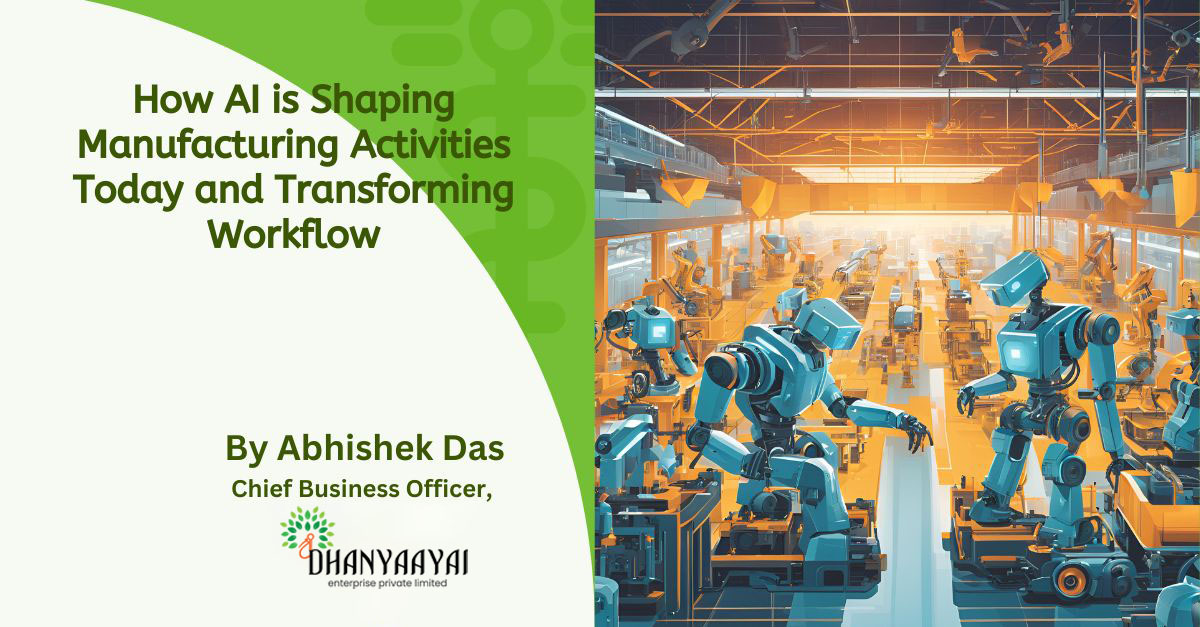
How AI is Shaping Manufacturing Activities Today and Transforming Workflow
Artificial Intelligence (AI) is revolutionizing various
sectors, with manufacturing being one of the most significantly impacted
fields. As industries face mounting pressures to improve efficiency, reduce
costs, and enhance product quality, AI technology is emerging as a critical
component in transforming traditional manufacturing processes. From intelligent
machines predicting maintenance needs to customized products on-demand, AI is
reshaping manufacturing in remarkable ways. Here’s how AI is transforming
manufacturing activities today and streamlining workflows for the future.
1. Predictive Maintenance
One of the standout applications of AI in manufacturing is
predictive maintenance. By using machine learning algorithms to analyze data
from sensors embedded in machinery, AI systems can detect signs of wear or
potential failures before they happen. For instance, BMW utilizes AI to monitor
and maintain its production lines, effectively predicting when equipment might
need attention. This allows manufacturers to schedule maintenance more
effectively, minimizing costly downtime and extending machine life. This
proactive approach not only reduces operational costs but also keeps production
lines running smoothly, resulting in higher productivity.
2. Quality Control
AI systems are significantly enhancing quality control
processes. Traditional quality checks rely on human inspectors who can be prone
to errors or oversight, but AI-powered vision systems can inspect products with
greater precision and speed. These systems can identify defects,
inconsistencies, or deviations from standards in real-time, enabling
manufacturers to maintain high-quality output and reduce waste. Tesla, for
example, uses AI-based image recognition to check for imperfections during
vehicle assembly, ensuring that only the best products reach the market. With
AI in quality assurance, companies are consistently raising the bar for product
excellence.
3. Supply Chain Optimization
AI is making supply chain management smarter by offering
advanced analytics that reveal deeper insights into the supply chain’s
dynamics. It can predict demand patterns, optimize inventory levels, and
enhance logistics efficiency. By analyzing vast amounts of data, AI algorithms
can forecast which products will be in demand, allowing manufacturers to adjust
production schedules. For example, Amazon’s AI-driven supply chain predicts
demand patterns to help manage inventory and delivery timelines seamlessly. This
agility reduces excess inventory costs and ensures timely delivery, keeping
customers satisfied and operations cost-effective.
4. Smart Manufacturing
Smart manufacturing—often called Industry 4.0—is driven by
the integration of AI, IoT, robotics, and data analytics to create more
efficient, adaptable manufacturing processes. Imagine a factory floor where
machines “talk” to each other, exchanging real-time data with human operators.
This level of communication allows for dynamic adjustments, like balancing
production loads or optimizing assembly lines. A company like Siemens has
implemented “smart factories,” where AI tools monitor, analyze, and adjust workflows
for maximum efficiency. AI-driven smart manufacturing provides a flexible
system that responds immediately to changes in demand, significantly boosting
productivity.
5. Automation and Robotics
AI is at the forefront of the automation revolution in
manufacturing, where advanced robotics handle complex tasks that would be
challenging or unsafe for human workers. These AI-powered robots can learn from
their surroundings, adapt to changes, and operate continuously. For example,
FANUC’s robotic arms use machine learning to refine their own movements over
time, perfecting tasks like assembly, packaging, and sorting. This automation
not only enhances safety by taking on dangerous tasks but also increases
efficiency through precision and speed, providing manufacturers with a powerful
tool for scaling production.
6. Enhanced Decision-Making
AI is also transforming decision-making in manufacturing by
providing data-driven insights that guide strategic choices. AI systems can
analyze historical data, identify market trends, and help manufacturers make
informed decisions about production, resource allocation, and risk assessment.
For instance, General Electric (GE) leverages AI to analyze its data, enabling
better decision-making across its energy and manufacturing sectors. By aligning
production with market demands, manufacturers can stay agile, respond quickly
to new opportunities, and optimize long-term success.
7. Customization and Personalization
Today’s consumers often expect personalized products, and AI
is enabling manufacturers to meet this demand at scale. By analyzing consumer
preferences and adjusting design parameters accordingly, manufacturers can
offer customizable goods without sacrificing efficiency. Nike, for instance,
uses AI to create customized sneakers based on individual preferences, from
color choices to material selection. This capability to respond to unique
customer needs enhances satisfaction and builds brand loyalty, giving companies
a competitive edge in an increasingly customized market.
Conclusion: The Future of AI in Manufacturing
As AI technology continues to evolve, its impact on the manufacturing sector is profound and far-reaching. From predictive maintenance and quality control to supply chain optimization and smart manufacturing, AI is driving efficiency, enhancing product quality, and enabling unprecedented flexibility. Looking ahead, advancements in AI, such as real-time 3D modeling and autonomous robotic systems, could further reshape manufacturing, allowing factories to operate with minimal human intervention. Manufacturers that embrace AI today are not only transforming their workflows but also positioning themselves for long-term success in an increasingly competitive landscape. The adoption of AI in manufacturing isn’t just a trend; it’s a foundational shift in how industries will operate in the years to come.
Note: You might be interested in "Unlocking the $ Trillion dollar opportunity"